
HISTORY ABOUT IT
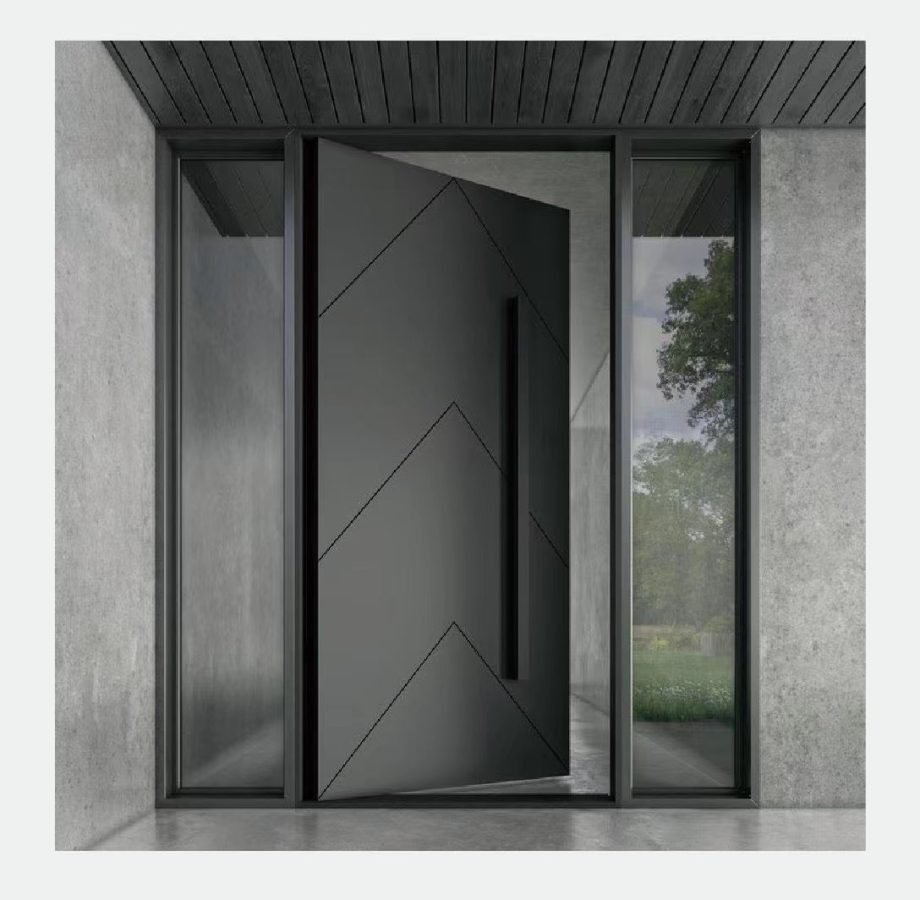
The hinges (the vertical axis) of a pivot door are installed at the top and bottom of the door, hidden inside it. It rotates along a vertical axis. In addition of it ,the movement of this is visually very different from that of a regular hinged door. Not only this opening method gives it unique aesthetic value but also a modern appearance.
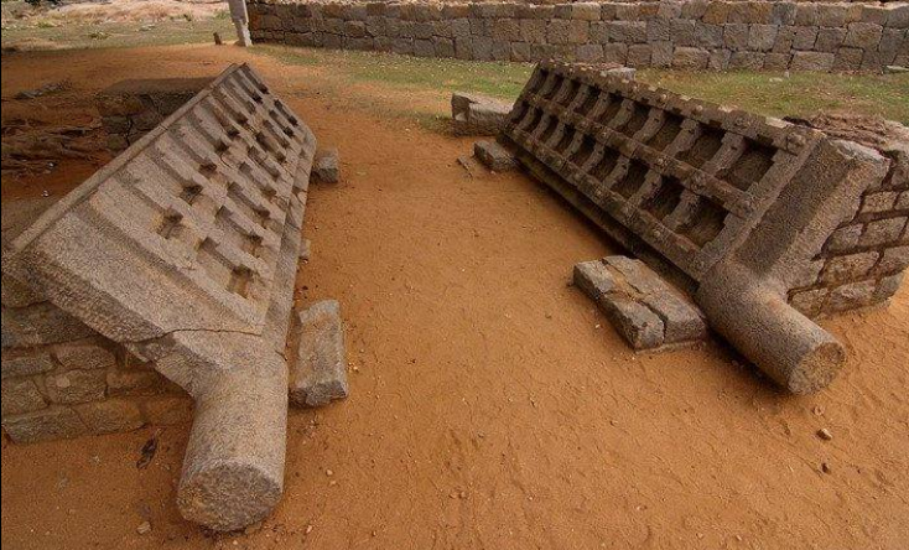
↑ The stone gate of Hembi in India: Two huge stone pivot gates, and the main shaft is clear and distinct.
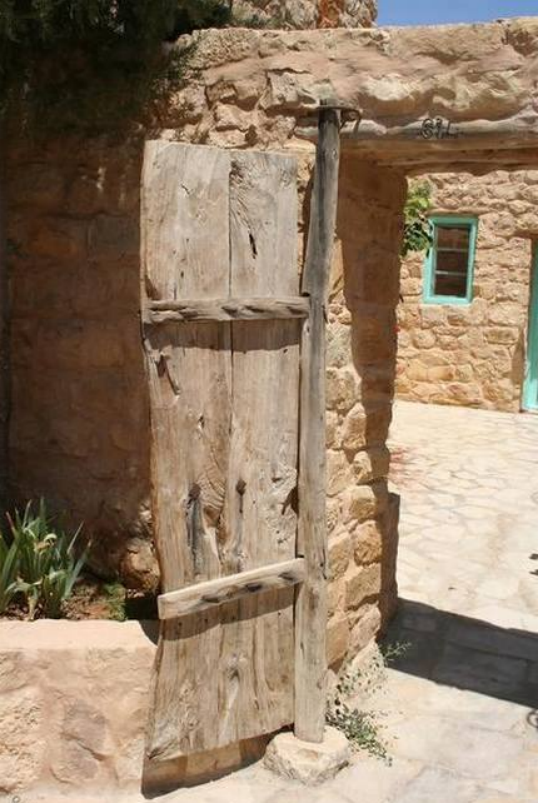
As ancient, with the vertical axis clearly visible in its threshold and beams.
What components make up a pivot door?
A pivot door is essentially a rotating panel that can have any type of design and size. It consists of the bottom plate, and the top plate.
Unlike ancient pivot doors, modern pivot doors do not rotate on an extended vertical axis. Instead, The pivot hinge and a top pivot drives system. As we all known, the bottom of the door use mortise and tenon joint, while the top is mortised into the top of the door. On the installed door, these two components are not visible.
The hinge can be placed at any desired position on the door. This determines the position of the vertical axis – the main axis – around which the door rotates.
What are the advantages of pivot doors:
Pivot doors are quite different in size from ordinary doors. Pivot doors can be much larger. Compared with traditional hinged doors, they can be higher and wider. Some examples of pivot doors exceed 13 feet in width and 23 feet in height. With the right, high-quality pivot hinges, anything is possible.